Analysts pegged the U.S. spirits market at ~$44B with ~6% annual growth (through 2022), driven by Millennials (about 32% of consumption), rising variety (tequila, brandy, whiskey), and the craft boom—now mirrored by major brands. To win, distilleries must track shifting tastes, time launches precisely, and stay agile amid consolidation while controlling cost and risk.
Adroit partners with distillers to turn that volatility into performance—mapping your specific challenges, applying best practices, leveraging your existing systems, and implementing Adroit software where it adds value. The result: tighter planning and logistics, faster innovation cycles, and products delivered to market on time and on budget.
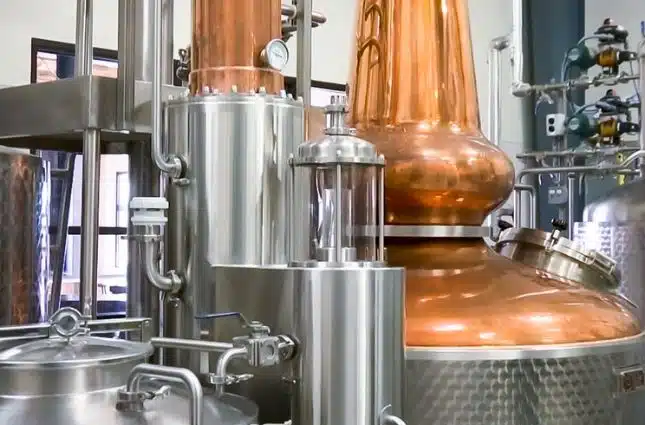
Modern distilleries run batch fermentations that feed batch or high-volume distillation, then bottling and packaging—best managed by ERP/MES that track recipes, lots, yields, and compliance end-to-end. A vodka line, for example, mashes grain/vegetable inputs, sanitizes, adjusts acidity, ferments with yeast for 2–4 days to produce ethanol, distills to ~95–100% to remove impurities, dilutes to bottling strength (≈40%), and packages for distribution. Because one system rarely fits every plant, Adroit aligns best practices with the right niche ERP/MES to improve forecasting and S&OP, production scheduling, traceability, inventory control, and distribution channel management—so process and system improvements translate into measurable performance.
Adroit understands the pressures of ramping production to meet demand. We help distilleries replace ad-hoc processes with integrated planning and systems so growth is predictable, compliant, and cost-effective.
Integrated S&OP & Forecasting: Cohesive sales–operations–finance plan with accurate forecasts, capacity, inventory (including pipeline), and financial metrics.
Standardize & Digitize: Common procedures across sites; move from spreadsheets to an integrated formulation/recipe system with LIMS where needed.
Traceability & Compliance: End-to-end lot genealogy, GFSI food-safety schemes embedded in daily work, and alignment with federal and state liquor laws.
Cost, Inventory & Sustainability: Visibility to yields and unit costs, stronger inventory planning/management, and proactive by-product and waste programs.