
Enterprise Resource Planning systems are a necessary and critical part of a food processing or distribution company’s portfolio of systems. They do a great job of capturing transactions, maintaining perpetual inventory, accruing financial records, and facilitating the execution of schedules and plans. However, ERP tends to fall short in sensing change within the food supply chain and in providing recommendations for the optimal response. Change can take the form of late or canceled supply from either a supplier or production, new or phased out suppliers, unexpected customer orders, lower than expected customer orders, canceled orders, new items, new customers, promotions, and much more. Making sense out of this chaos and applying planning resources to the most impactful issues and responses can be a challenge. ERP assumes infinite supply but what if our constraint is supply? How do we manage customers for the optimal solution given the constraint?
Upon running ERP Planning, the typical system will provide a recommended set of purchase orders and production orders to meet planned demand and booked sales orders. If the orders are required within a timeframe that is less than the lead time, then the ERP issues expedite and warning messages. The more volatility within the demand the more chaotic the expedite/de-expedite messages. Just knowing which expedite messages to focus on can be difficult. ERP expedite messages don’t provide guidance on what to do to minimize the impacts and to maximize profitability. Which customer is shorted? How do we optimize service levels?
ERP is rooted in the certainty of orders and a single forecast but doesn’t provide a sandbox / “what-if” environment to model new customers, new products, new facilities, etc. What is our projected gross margin with the current plan? What if we launch a new higher-margin product with a certain degree of cannibalization of the existing product line? Will we have the capacity? What will the demand be on our supply chain? Will our suppliers have the capacity?
Most ERP systems have basic forecasting models that capture the input of the forecast but don’t generate it. The food industry relies heavily on pricing and promotions with high expectations of service levels. This has pushed the industry to more of a make to stock environment reliant upon accurate forecasts. As forecasts change and as the forecast is consumed by actual orders, the food inventory is aging. Projecting product expirations need inform pricing and promotion decisions.
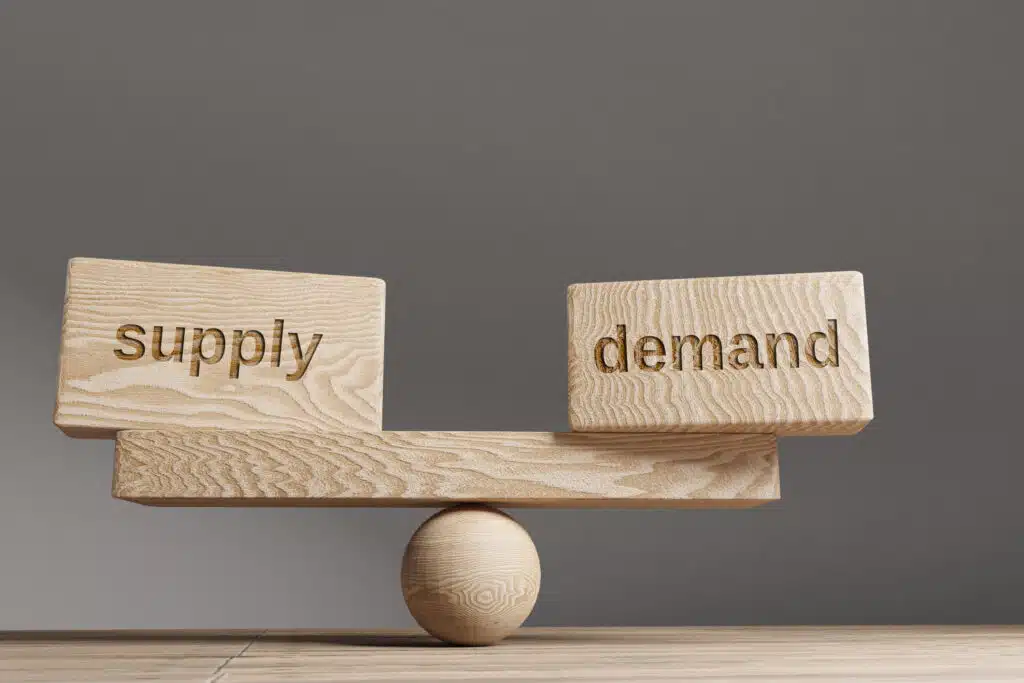
Food processors have a reliance upon farms. Farm output is a factor of weather and planting choices. Forecasting supply and pricing is critical to food company planning and in turn to manage pricing and customer expectations. ERP looks at planning from the demand side and assumes infinite supply to only be dealt with via “expedite” messages. Proper supply chain planning within food looks at the problem from both ends to determine the optimal solution.
An integrated supply chain planning tool such as Adroit’s Outperform Planning integrates into the Enterprise Resource Planning solution and provides answers to these and other critical supply chain planning challenges.